
For Umrah pilgrims, Dua is a friendly conversation between the person and Allah SWT. This is a form of worship in which a person connects directly with his Lord. Dua (دُعا) means to request Allah SWT or to ask for something, to keep words. Allah SWT said in the Holy Quran:
“Pray to me, I will respond to your prayers.” – Surah Ghafir (40:60)
Umrah travel is a departure towards a destination (Makkah), hence prayer is the spiritual essence of this journey. In an Umrah trip, a Muslim requests Allah SWT to assist, guide, and bless him. The core of this pilgrimage is incomplete without prayers, as they are the light of that trip and the soul of worship. So, in this complete guide, we will learn all the important supplications for the Umrah journey that are recommended from leaving our accommodation until the Umrah rituals are over.
A list of essential Duas for Umrah travel:
- Dua for Umrah Travel (When Leaving Home)
- Dua Upon Entering Makkah City
- Dua When Entering the Masjid Al-Haram
- Dua When Seeing the Holy Kaaba
- Dua While Performing Tawaf Around the Kaaba
- Dua for Sa’ee on Safa and Marwah Hills
Dua for Umrah Travel (When Leaving Home)
A Muslim starts his Umrah journey with Tawakkul (trust) only in Allah SWT. This reminds us that the real power is neither a car nor money, but everything is possible because of Allah’s SWT help. Prophet Muhammad ﷺ said that when one departs from his house, he must say this Dua:
بِسْمِ اللَّهِ، تَوَكَّلْتُ عَلَى اللَّهِ،لاَحَوْلَ وَلاَ قُوَّةَ إِلَّا بِاللَّهِ
“In the name of Allah, I place my trust in Allah, and there is no power and no might except with Allah.” – Riyad as-Salihin: 83
When riding on a vehicle such as a car, bus, or plane, then recite this Dua for Umrah travel:
سُبْحَانَ الَّذِي سَخَّرَ لَنَا هَذَا وَمَا كُنَّا لَهُ مُقْرِنِينَ وَإِنَّا إِلَى رَبِّنَا لَمُنْقَلِبُونَ
“Glory be to Him Who has subjected this to us, and we could never have accomplished it [by our own strength]. And surely, to our Lord we shall return.” – Surah Az-Zukhuruf (43:13-14)
Dua Upon Entering Makkah City
Makkah is the preferred city of Allah SWT, in which good deeds have more rewards. A Muslim prays to Allah SWT to keep him safe from punishment. As soon as one enters Makkah, one desires the forgiveness and closeness to the Lord. Then recite this Dua:
اللَّهُمَّ هَذَا حَرَامُكَ وَأَمْنُكَ، فَحَرِّمْنِي عَلَى النَّارِ، وَآمِنِّي مِنْ عَذَابِكَ يَوْمَ تَبْعَثُ عِبَادَكَ، وَاجْعَلْنِي مِنْ أَوْلِيَائِكَ وَأَهْلِ طَاعَتِكَ
Besides this, another Dua is also prescribed as Dua-e-Dukhool (for entering the city). When entering a city like Makkah, the centre of sustenance and peace, it’s Mustahab to recite this Dua:
اللَّهُمَّ اجْعَلْ لَنَا فِيهَا قَرَارًا وَرِزْقًا حَلَالًا
“O Allah, make for us a place of stability therein and grant us lawful sustenance.”
Dua When Entering the Masjid Al-Haram
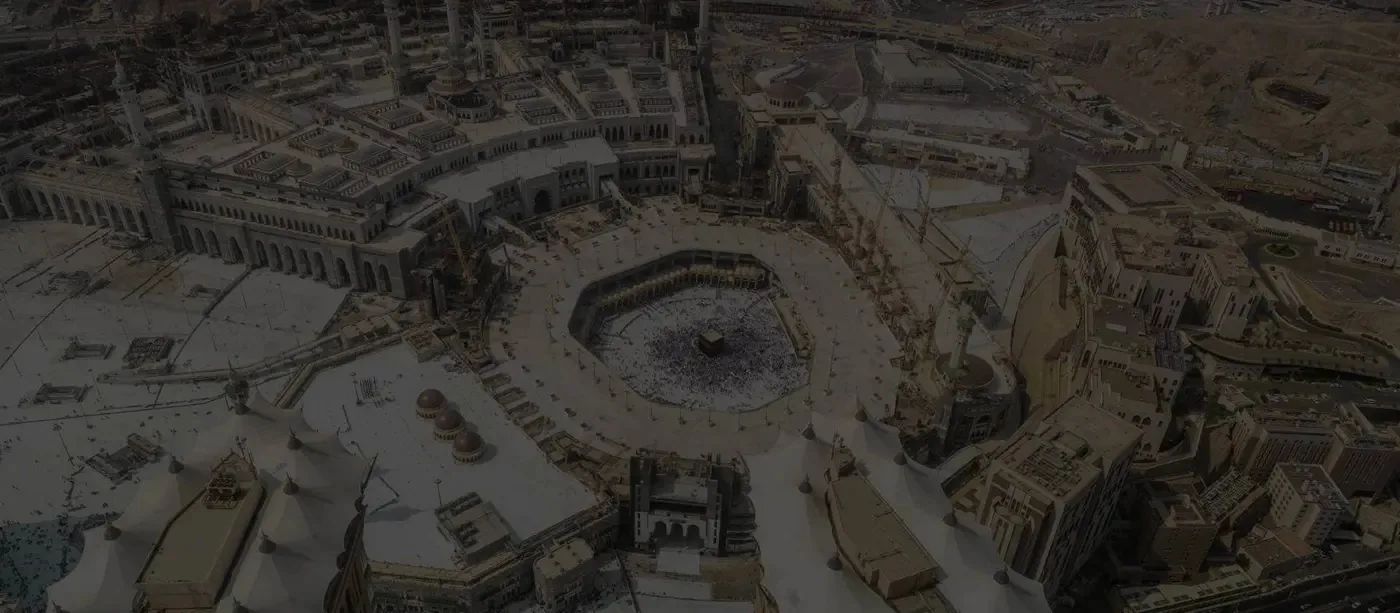
Masjid Al-Haram, also known as the Grand Mosque of Makkah, is the biggest mosque in the world and Islam that holds the Holy Kaaba inside. When a Muslim visits this holy land, he shows respect, humility, asks Allah SWT to forgive him and to clean up his wrong actions. It is approximately like this narration or Dua in Arabic:
اللَّهُمَّ افْتَحْ لِي أَبْوَابَ رَحْمَتِكَ
“O Allah, open for me the doors of Your mercy.” – Sahih Muslim: 713a
Recite this when putting feet inside the doors of the Mosques like Masjid Al-Haram or Masjid Al-Nabawi with joy and respect in the heart. If one can read verbally, it’s good; otherwise, recitation from the heart is accepted as well. When Umrah pilgrims recite this Dua during Umrah travel, a feeling of piety and peace grows, and Allah SWT makes their Umrah pilgrimage acceptable.
Dua When Seeing the Holy Kaaba
The sight of the Holy Kaaba is a spiritual connection for a pilgrim, particularly when a pilgrim is a first-timer of Umrah. Did you know? Praying makes this moment even more gracious and blessed. According to the Quran and Hadiths, Allah SWT mostly accepts the prayers done looking at the Holy Kaaba.
A Muslim’s heart goes directly to Allah SWT, and he presents his needs, happiness, or sorrows to the Holy Kaaba. When seeing the Kaaba for the first time, recite the following Dua:
اللَّهُمَّ زِدْ هَذَا الْبَيْتَ تَشْرِيفًا وَتَعْظِيمًا وَمَهَابَةً وَبِرًّا
“O Allah, increase this House (the Kaaba) in honour, grandeur, awe, and righteousness.”
Intention should be clear while reading this Dua by looking at the Kaaba. Make it with calm and respect; don’t do it in a hurry, recite this from the heart. It’s likely to combine the recitation with Takbir and Tahlil, as اللہ اکبر, سبحان اللہ, or الحمدللہ.
Dua While Performing Tawaf Around the Kaaba
Tawaf is believed to make seven rounds around the Holy Kaaba, and the Hajar-e-Aswad (Black Stone) is its starting point. Tawaf is a mix of worship and prayer, in which an Umrah pilgrim presents his prayers and requests to Allah SWT. Duas can be recited at any time while performing Tawaf, in particular:
- When touching or pointing towards the Black Stone while following the Sunnah by saying “بِسْمِ اللهِ اللهُ أَكْبَر”.
- Praying for needs like sustenance, health, an increase in faith, or the protection of the family.
- Keep praying to Allah SWT with heart or tongue, as Tawaf is the best time for Duas.
However, pilgrims reaching the place between Rukn-e-Yemeni and Hajar-e-Aswad say the given Dua. Prophet Muhammad ﷺ often used to say it between those corners:
رَبَّنَا آتِنَا فِي الدُّنْيَا حَسَنَةً وَفِي الآخِرَةِ حَسَنَةً وَقِنَا عَذَابَ النَّارِ
“Our Lord, give us in this world good and in the Hereafter good, and protect us from the punishment of the fire.” – Surah Al-Baqarah (2:201)
Dua for Sa’ee on Safa and Marwah Hills
Sa’ee is a very important ritual of Umrah. It basically consists of seven times walking or running between Safa and Marwah. This brings back thoughts of the tale of Hazrat Hajirah (رضی اللہ عنہ), who was searching for water. Therefore, reading this recitation before starting the Sa’ee or when climbing Safa is Sunnah:
إِنَّ الصَّفَا وَالمَرْوَةَ مِن شَعَائِرِ اللَّهِ
“Indeed, as-Safa and al-Marwah are among the symbols of Allah.” – Surah Al-Baqarah (2:158)
Pilgrims also recite another Dua, which is:
لَا إِلَهَ إِلَّا اللَّهُ وَحْدَهُ لَا شَرِيكَ لَهُ، لَهُ المُلْكُ وَلَهُ الحَمْدُ، وَهُوَ عَلَى كُلِّ شَيْءٍ قَدِيرٌ
“There is no God but Allah, alone, without any partner. To Him belongs the dominion and all praise, and He is over all things omnipotent.”
This Dua or Tasbih is general, and pilgrims can recite this at every step/walk of Sa’ee. At the same time, it’s not obligatory, but it a very useful for remembering Allah SWT in a Masnoon way. Umrah pilgrims can also do personal supplications with this.
This is a very essential Dua for Umrah travel, as in Islam every act of worship has a proper etiquette and order, and it’s also Sunnah to pray while leaving the mosque. This is done after the completion of Umrah when you are returning from the Masjid Al-Haram to your hotel or home. A famous Dua recited when leaving the mosque:
اللَّهُمَّ إِنِّي أَسْأَلُكَ مِنْ فَضْلِكَ وَرَحْمَتِكَ
“O Allah, I ask You for Your bounty and Your Mercy.”
It’s particularly encouraged to read after completing the Umrah rituals:
اللَّهُمَّ تَقَبَّلْ مِنِّي
“O Allah, accept [this] from me.”
To conclude, in Umrah travel, a Muslim or pilgrim can recite Duas as much as he wants, such as for himself, for his family members, and for the whole Muslim Ummah. Remember that Masnoon Duas are a guide, but the spirit of Dua is sincerity and connection with Allah SWT.
All the prayers for the Umrah travel in this article are taken from these two sites:
quran.com
sunnah.com
References
Sources used for this article.
- Qur’an 40:60: “Call Upon Me, I Will Respond to You” — directly supports the article's opening discussion about dua as an act of worship and calling upon Allah.
- Riyad as-Salihin 83: “Dua When Leaving the House” — directly supports the dua “Bismillah, tawakkaltu ‘alallah, wa la hawla wa la quwwata illa billah” when leaving one's home. The narration is reported from Abu Dawud, al-Tirmidhi and al-Nasa'i, and al-Tirmidhi classified it as Hasan.
- Qur’an 43:13–14: “Dua When Riding a Vehicle” — directly supports the recitation “Subhanalladhi sakhkhara lana hadha…” when travelling by a vehicle. This applies to modern forms of transport as well.
- Sahih Muslim 713a: “Dua When Entering and Leaving the Mosque” — directly supports “Allahumma aftah li abwaba rahmatik” when entering a mosque and “Allahumma inni as’aluka min fadlik” when leaving. This is directly relevant to entering and leaving Masjid al-Haram.
- Sahih al-Bukhari 1613: “Takbir When Reaching the Black Stone” — directly supports saying Takbir when reaching the Black Stone during Tawaf and points to the authentic practice of the Prophet ﷺ.
- Qur’an 2:201: “Our Lord, Give Us Good in This World and the Hereafter” — directly supports the Rabbana atina fid-dunya hasanah… supplication mentioned in the Tawaf section.
- Qur’an 2:158: “Safa and Marwah Are Among the Symbols of Allah” — directly supports the Qur’anic recitation used when beginning Sa'i and establishes Safa and Marwah as sacred symbols associated with Hajj and Umrah.
- Sahih al-Bukhari 1790: “The Sa'i Between Safa and Marwah” — directly supports the practice of performing Sa'i and the connection between the ritual and Qur’an 2:158. Aisha (RA) explained that the Prophet ﷺ established Sa'i between Safa and Marwah as part of the pilgrimage.
- Sunan Ibn Majah 3074: “The Prophet’s Recitation and Supplication at Safa” — directly supports the detailed Sa'i practice: reciting “Indeed, Safa and Marwah are among the symbols of Allah,” beginning with Safa, praising Allah, saying Takbir/Tahlil, and reciting “La ilaha illallahu wahdahu la sharika lahu…”.
Last reviewed dates (4 October 2026). Rules set by the Saudi authorities change — check the official sources above, or call us, before you book around a deadline.

Planning this trip?
Get in touch with our team today for tailored advice and a quote for your pilgrimage.
Get a quote 020 3865 6950

