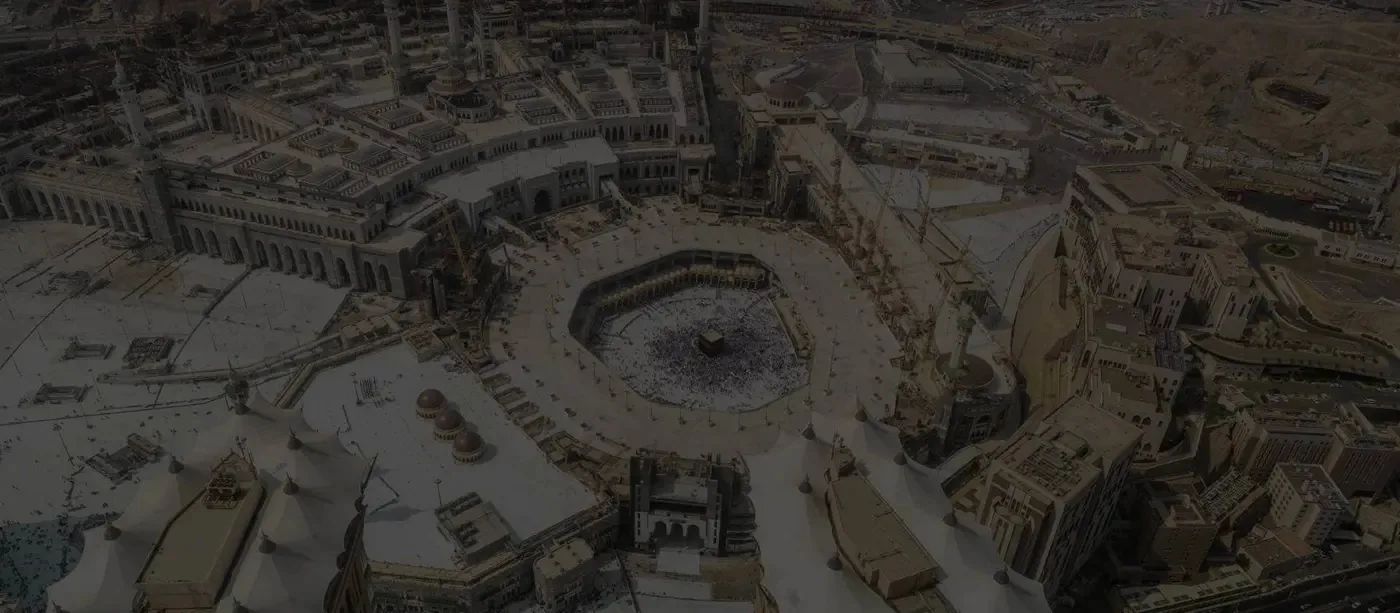

Ziyarat of holy places in Makkah is an important part of Umrah. Every pilgrim does this when they go on Umrah. Actually, it’s the act of visiting the religious and historical places of Islam in Makkah. Almost all these holy sites are related to Prophet Muhammad (PBUH), His family, companions, and other revered figures of Islam.
The word “Ziyarat” is an Arabic word that means “to visit”. In Makkah, the standard Ziyarat tour usually takes between 2 and 4 hours, but the actual time depends on the specific site and the tour type. The total time it takes can be less or more.
The popular places in Makkah for Ziyarat during Umrah are:
Jabal-e-Rahmat (Mount Arafat)
Mount Arafat is located in the plain of Arafat, which is around 20 km from the Makkah city. It’s an important place because of Prophet Muhammad’s (PBUH) last sermon here, a place of standing during Hajj, and it’s associated with Allah’s (SWT) mercy for forgiveness (that’s why it’s known as the Mount of Mercy).
Jabal-e-Rahmah is a significant Ziyarat point during Umrah. Pilgrims visit there to make Duas, offer prayers (Namaz), and to experience the deepest feelings of Hajj. Some Islamic traditions hold that Arafah is a special place to make Duas during Umrah. Pilgrims can easily climb up its end level surface and perform prayers because the Mount is made up of hard black stones.
Moreover, the Jabal is 454 metres high above sea level and 70 metres from the plain. Geologically, it’s counted as a granite hill, having uneven, sloped, and jagged rocks, which makes it safe for pilgrims to move on their steps. Therefore, Jabal-e-Rahmah is an outstanding location to perform prayers and repent for sins.
Jannat-al-Moulla
Jannat-al-Moulla is a cemetery named “Moulla”, located in the north of Masjid Al-Haram, Makkah. Jannat-al-Moulla is the second famous cemetery in Islam because of its early historical significance. Umrah pilgrims visit this cemetery as a Ziyarat place and to show respect to Islamic personalities who are buried there. The place has a popular name in history, so pilgrims show their religious significance and offer Dua prayers.
Most esteemed celebrities of Islam buried in Jannat-al-Moulla include the first wife of Prophet Muhammad (PBUH), Khadijah R.A, His mother Aminah R.A, His grandfather Abdul Muttalib R.A, His Uncle Abu Talib, Abdullah R.A – the second son of the Prophet (PBUH) and Khadijah R.A, and other notable companions. Because of these great personalities, pilgrims visit Jannat-al-Moulla.
Jannat-al-Moulla is also known as Al-Hajjun because the cemetery lies on the Mount Hajjun base. It’s approximately one kilometre from the Haram Mosque and is up to 100,000 square metres in size.
Masjid-e-Nimra
It is sometimes also referred to as Masjid al-Namirah, located in the Wadi Uranah near the Plain of Arafat in Makkah. This Mosque is 12 to 13 miles away from Masjid al-Haram and marks one of the significant Ziyarat points for Umrah pilgrims. Its importance is also highlighted when Prophet Muhammad (PBUH) stayed here before delivering His last sermon during Hajj.
Umrah pilgrims go to Masjid-e-Nimra and perform prayers, particularly in the open courtyard space, to experience spiritual significance. They sit quietly inside the Mosque and reflect on the past while making supplications. Masjid-e-Nimra can hold 3.5 lakh individuals at a time (during Hajj), with 64 doors and 10 main entrances. Moreover, pilgrims take photos outside the mosque as a reminder of their visit.
Masjid-e-Jinn
The unique fact that makes the Masjid-e-Jinn famous is that a gathering of Jinn heard Quran recitation there by Prophet Muhammad (PBUH) and turned into Islam. This Mosque is located near the Jannat-al-Moulla in Makkah and holds the Ziyarat importance for Umrah pilgrims. Masjid-e-Jinn is around 2 km away from the Grand Mosque of Makkah and easily accessible within 10-15 minutes on foot.
Because the Mosque of the Jinn have a unique history in Islam, pilgrims during Umrah go there for Ziyarat and reflect on the power of the Holy Quran. Guided tours properly explain the amazing event to pilgrims and what exactly happened there in past.
The Holy Quran says about it:
“It has been revealed to me that a group of Jinn listened (Quran) and said (to their fellow Jinns): Indeed, we have heard a wonderful recitation.” – 72:1
Masjid al Shajarah
Mosque of the Tree is a small mosque located in Makkah. It’s opposite to the Masjid-e-Jinn, the north side of the Grand Mosque and close to the entrance of Jannat-al-Moulla cemetery. Masjid al Shajarah marks the event when a tree moved towards the Prophet Muhammad (PBUH) and greeted Him by the command of Allah SWT. This mosque was built between 87-93 AH during the governorship of Umrah Ibn Abdul-Aziz.
The main purpose of the Umrah pilgrims’ Ziyarat is to understand the broad history of Islam marked by this location. They prayed there and marked attendance to the extraordinary miracle (the tree uprooted itself) of the Prophet (PBUH).
Jabal-al-Nour
The Mountain of Light is counted in among the most religious sites in Makkah for Ziyarat. This is the place where the first revelation of the Holy Quran was received by the Prophet Muhammad (PBUH) through the Angel Gabriel. This honourable event was held inside the Cave of Hira, which is located near the top of this mountain. The event is recorded in the Holy Quran:
“Read (O Prophet!) In the name of your Lord Who created.” – 96:1
Pilgrims often visit Jabal-al-Nour during Umrah as well as Hajj to experience the feelings of the place where the holy book of the Islamic religion’s first words were revealed by Allah SWT. They reflect on the early beginnings of Islam. Finally, praying Duas and Namaz near the Hira Cave is essential for every pilgrim.
Jabal-e-Sour
Mount Thawr is also a remarkable and important Ziyarat point for every Umrah pilgrim in Makkah. It holds the Cave of Thawr where the Prophet Muhammad (PBUH) and His companion Abu Bakr (R.A) hid for three days from Quraysh. This incident is also mentioned in the Quran, Surah al-Tawbah:
“Do not worry, indeed Allah is with us.” – 9:40 (half part, words of the Prophet PBUH to Abu Bakr R.A)
The main purpose of the Umrah pilgrims’ Ziyarat is to show love and respect to the Prophet (PBUH). They also make supplications and offer Nafal prayers to better understand the spiritual connection and renewal.
Canal Sakinah
Canal Sakinah is an old canal system, which is also known as Ain Zubaidah, built by Zubaidah bint Jafar. This is a historic water system which was created between 174 and 195 AH. The canal is approximately 35 km long and stretches from Wadi Nu’man to Makkah while passing through Arafat and Muzdalifah.
Canal Sakinah is a major part of Makkah’s heritage and marvel. While it’s not in function now, it serves as a Ziyarat point for pilgrims and visitors. This shows that Islamic history was so ancient and strong. While this is not a point for offering prayers (just heritage), pilgrims can pray if they find some clean places.
To be noted, Makkah holds many Ziyarat points, and it is itself a Ziyarat city for Muslims. Ziyarats are totally optional, not part of Umrah, but pilgrims often take this service when purchasing All- Inclusive Umrah packages 2026. The main purpose is performing Umrah, and it’s important than Ziyarats.
References
Sources used for this article.
- Discover Makkah — Cave and Mount of Thawr
- Saudipedia — Jabal al-Rahmah
- Saudipedia — Namirah Mosque
- Saudipedia — Jabal al-Nour
- Qur'an 96:1-5
- Qur'an 9:40
- Qur'an 72:1
- Sahih Muslim 449
- Saudipedia — Ghar Hira
- Saudipedia — Jabal Thawr Cultural District
- Ministry of Hajj and Umrah — “Location of Cave Hira: north of the Grand Mosque, at the top of Jabal Al-Nour"
- Nusuk — Makkah & Madinah
Last reviewed dates (4 October 2026). Rules set by the Saudi authorities change — check the official sources above, or call us, before you book around a deadline.

Planning this trip?
Get in touch with our team today for tailored advice and a quote for your pilgrimage.
Get a quote 020 3865 6950

