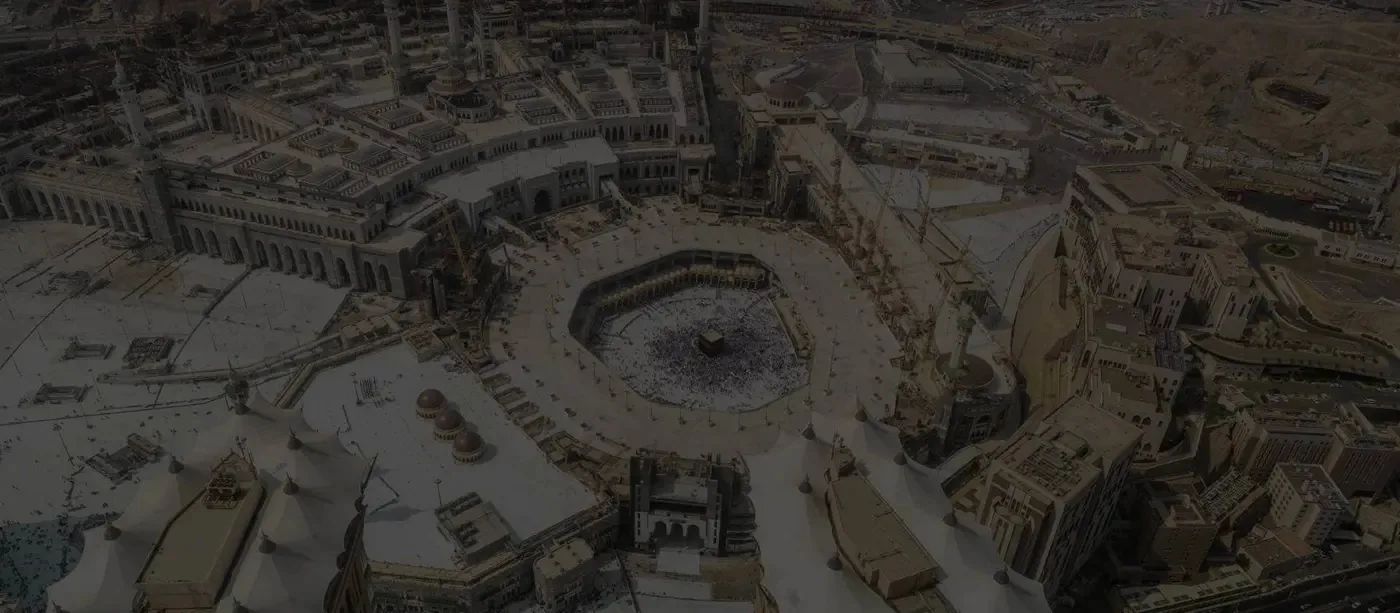

Yes, you can visit the Kiswa Factory in Makkah with a free permit booked in advance. The Kiswa Factory, officially the King Abdulaziz Complex for Holy Kaaba Kiswa, is where craftsmen make the black silk cover of the Kaaba. The complex sits in the Umm Al-Joud area, about 10 km (around 6 miles) from Masjid al-Haram, and opens to visitors Monday to Thursday, 8 AM to 11 AM. A visit shows pilgrims the materials, the gold and silver thread work and the history of the Kiswa. This guide covers what the Kiswa is, where the factory is, its history, how craftsmen make the Kiswa, the old Kiswa, the annual changing ceremony and the cost. The guide then covers who can visit, how to get a permit, the visiting hours, what you will see, how to get there and tips for your visit.
What is the Kiswa of the Kaaba?
The Kiswa of the Kaaba is the black silk cloth that covers the Kaaba, embroidered with Quranic verses in gold and silver threads. Urdu speakers call the Kiswa Ghilaf e Kaaba. A new Kiswa covers the Kaaba every year on 1 Muharram, the first day of the Islamic new year.
Where is the Kiswa Factory Located?
The Kiswa Factory is located in the Umm Al-Joud area of Makkah, about 10 km (around 6 miles) from Masjid al-Haram. The trip takes 20 to 25 minutes by car.
Umm Al-Joud Area
Umm Al-Joud is a district on the old Makkah–Jeddah road, west of the Grand Mosque. The Exhibition of the Two Holy Mosques Architecture stands next to the Kiswa complex, so pilgrims can see both sites in 1 trip.
History and Evolution of the Kiswa Factory
The Kiswa Factory began in 1927, when King Abdulaziz ordered the Kingdom to make the Kiswa itself. Before 1927, the Kiswa came from Egypt.
First Saudi Kiswa Factory
The first Saudi Kiswa Factory opened in Makkah in 1927. Before then, Egypt made the Kiswa and sent the cloth to Makkah by caravan or ship, and the long trip sometimes damaged the fabric. King Abdulaziz wanted the Kiswa made in Saudi Arabia. The first factory started with a team of workers trained in weaving, dyeing and adding Quranic verses on silk. Fitting a factory visit into a short trip is easier with 5 time management strategies for Umrah.
Umm Al-Joud Kiswa Factory Today
The Umm Al-Joud Kiswa Factory opened in 1977 under King Khalid bin Abdulaziz, replacing the earlier, smaller factory. The factory was later renamed the King Abdulaziz Complex for Holy Kaaba Kiswa. The complex runs under the General Presidency for the Affairs of the Grand Mosque and the Prophet's Mosque, the Saudi government agency that manages Masjid al-Haram and Masjid an-Nabawi. The complex has separate departments for each stage of the work, with engineers, designers, weavers, calligraphers and an inspection team.
From Manual to Modern: How the Factory Has Modernised Over Time
The factory has modernised from wooden looms and hand tools to computer-planned designs and electronic weaving machines. Machines now speed up the weaving and dyeing stages, and computers plan the patterns and verses for accurate measurements. Workers still stitch the Quranic verses by hand, setting each gold and silver thread with care.
How is the Kiswa Made? Inside the Manufacturing Process
The Kiswa is made in 7 main stages, the Saudi Press Agency (SPA) reports. The 7 stages are water purification, silk washing, black dyeing, weaving, printing the Quranic verses, gold and silver embroidery, and final assembly with inspection. The work takes about 11 months.
Materials Used in the Kiswa
The Kiswa for the Hijri year 1447 After Hijrah (AH) used 47 pieces of black silk and 68 Quranic verses in silver threads plated with 24-karat gold, the SPA reports. The finished Kiswa weighs about 1,415 kg (around 3,120 lb). The materials are 825 kg (around 1,820 lb) of silk and 410 kg (around 900 lb) of raw cotton. The metal threads are 120 kg (around 265 lb) of gold-plated silver thread and 60 kg (around 130 lb) of pure silver.
Dyeing and Weaving the Cloth
Dyeing and weaving the cloth starts with washing the raw silk in purified water and dyeing the silk black. Weaving machines then turn the dyed silk into the base fabric, with the verses and patterns woven into the cloth.
Embroidery, Printing & Gold Thread Work
Embroidery, printing and gold thread work turn the plain fabric into the Kiswa: the printing department prints the Quranic calligraphy onto the fabric as a guide for the embroiderers. Embroiderers then stitch over the printed verses by hand with silver threads plated in gold, building the raised lettering of the Kiswa.
Sewing and Final Assembly
In final assembly, a large computer-controlled sewing machine joins the embroidered pieces into the 4 sides of the Kiswa. An inspection team checks every piece before the Kiswa goes to the Grand Mosque.
What Happened to the Old Kiswa?
The old Kiswa is removed, cut into pieces and given as gifts to Muslim leaders, institutions and visiting dignitaries. Museums keep other pieces.
The Kiswa Annual Changing Ceremony
The Kiswa annual changing ceremony replaces the old Kiswa with the new Kiswa on 1 Muharram. The General Presidency for the Affairs of the Grand Mosque and the Prophet's Mosque runs the ceremony. For 1447 AH, a team of 154 craftsmen from the complex carried out the change.
Why the Kiswa is Raised During Hajj
The Kiswa is raised during Hajj to protect the cloth from damage, as pilgrims touch and pull the cloth during Tawaf. In mid-Dhul Qa'dah, staff lift the lower edge of the Kiswa about 3 metres (around 10 feet). A white cotton band about 2 metres (around 6.5 feet) wide covers the raised part on all 4 sides.
When the Kiswa is Changed
The Kiswa is changed on 1 Muharram, the first day of the Islamic new year. Until 2022, the change took place on 9 Dhul Hijjah, the Day of Arafat; a royal decision moved the change to 1 Muharram from 1444 AH. The next change falls on 1 Muharram 1449 AH, in early June 2027.
How Much Does the Kiswa Cost?
The Kiswa costs about 25 million Saudi Riyals (SAR) a year to make, Saudi media reports.
Can Anyone Visit the Kiswa Factory?
Yes, visitors with an approved permit can visit the Kiswa Factory, including pilgrims on an Umrah visa. Visits run in set time slots on weekday mornings.
Who Can Visit the Kiswa Factory?
The Kiswa Factory welcomes individuals, families and groups with an approved permit. The permit form asks for the name and nationality of each visitor.
Visit Timings
Visit timings are Monday to Thursday, 8 AM to 11 AM, the Royal Commission for Makkah City and Holy Sites (RCMC) states. Pick a time slot in the permit form.
How to Get an Appointment to Visit the Kiswa Factory
To get an appointment to visit the Kiswa Factory, apply online for a free visit permit through the General Presidency for the Affairs of the Two Holy Mosques. Apply as an individual or as a company, based on the size of your group.
Step-by-Step Guide to Getting a Permit
- Go to the official website of the General Presidency for the Affairs of the Two Holy Mosques (http://www.gph.gov.sa).
- Log in with the Saudi National Single Sign-On (Nafath), using your Iqama or border number.
- Open the "Electronic Services" section.
- Select "Visit the Kaaba Kiswa Complex" and click "Start the service".
- Read and accept the terms and conditions.
- Enter your personal details.
- Choose the date and time of your visit.
- Add the names and nationalities of your companions.
- Click "Save Request" to submit the form.
- Wait for 2 text messages: the first confirms your request, and the second confirms the permit, if the General Presidency approves your request.
Kiswa Factory Permit Requirements
There are 3 Kiswa Factory permit requirements:
- Individual registration allows up to 10 companions.
- Company registration allows up to 50 companions.
- Each applicant can make 4 reservations at most in the same week.
Carry your passport and your permit message on the day. Pilgrims without a Nafath login find the online form hard to complete. Travel agencies offer the Kiswa Factory tour in their Hajj and Umrah packages. Choosing a trusted Umrah travel agency that includes the visit helps, if you have trouble with the online application.
Is There an Entry Fee for the Kiswa Factory?
No, there is no entry fee for the Kiswa Factory. The visit and the permit are free.
Visiting Hours & Days
The Kiswa Factory visiting hours are 8 AM to 11 AM, Monday to Thursday.
Monday – Thursday
Monday to Thursday, the Kiswa Factory opens 8 AM to 11 AM to visitors with a permit.
Friday – Sunday
Friday to Sunday, the Kiswa Factory is closed to visitors.
What Will You See Inside?
Inside the Kiswa Factory, you will see a short documentary film and an exhibition of the materials and tools used to make the Kiswa. The exhibition shows silk, gold and silver thread and needles. On visits during production, guests see the dyeing, weaving, printing, embroidery and assembly departments, and watch craftsmen stitch the Quranic verses by hand.
Honest Expectation Note
An honest expectation is that most visitors see only the exhibition hall and the documentary, not the production floor. Access to the weaving and embroidery areas depends on the time of your visit and the stage of production.
How to Visit Kiswa Factory from Makkah
To visit the Kiswa Factory from Makkah, take a taxi, a ride-hailing car or a private transfer from your hotel. Taxis do not wait outside the complex gates, so book your return trip before you go.
Distance and Directions
The distance and directions are simple: the Kiswa Factory is about 10 km (around 6 miles) west of Masjid al-Haram, on the old Makkah–Jeddah road in Umm Al-Joud. Ask the driver for the King Abdulaziz Complex for Holy Kaaba Kiswa, next to the Exhibition of the Two Holy Mosques Architecture.
How Far is the Kiswa Factory from Masjid al-Haram?
The Kiswa Factory is about 10 km (around 6 miles) from Masjid al-Haram, 20 to 25 minutes by car.
Tips for Visiting the Kiswa Factory
There are 5 tips for visiting the Kiswa Factory:
- Book your permit 3 to 5 days ahead, as slots fill quickly before Ramadan.
- Arrive 10 to 15 minutes before your time slot.
- Pick the 8 AM or 9 AM slot for smaller crowds and cooler weather.
- Carry your passport and your permit message.
- Arrange your return transfer before you leave the hotel.
Dress Code & Etiquette
The dress code is modest Islamic clothing, the same as for the Grand Mosque. Follow the guide, keep your voice low and do not touch the fabric, unless staff invite you.
Photography Policy
The photography policy changes by section. Follow the "No Photography" signs and ask staff before you take photos.
Family & Accessibility
The Kiswa Factory welcomes families and groups. The visit involves walking and standing between halls, so ask about wheelchair access when you book.
Frequently Asked Questions
Is entry to the Kiswa factory free?
Yes, entry to the Kiswa factory is free.
Can I visit on an Umrah visa?
Yes, you can visit on an Umrah visa with an approved visit permit.
How far is the Kiswa factory from Masjid al-Haram?
The Kiswa factory is about 10 km (around 6 miles) from Masjid al-Haram, 20 to 25 minutes by car.
What are the visiting hours?
The visiting hours are Monday to Thursday, 8 AM to 11 AM.
Can I take photos inside?
Yes, you can take photos in the exhibition areas, and staff restrict photos in the embroidery rooms.
How long does a Kiswa factory Makkah visit take?
A Kiswa factory Makkah visit takes about 1 hour at the complex, plus 20 to 25 minutes each way by car.
Do I need a private guide?
No, you do not need a private guide. Staff at the complex lead visitors through the exhibition.
Can I visit during Hajj season?
Yes, you can visit during Hajj season with a visit permit and a Hajj permit for Makkah. Plan the visit before 8 Dhul Hijjah, as the Hajj days leave no free time.
Conclusion
You can visit the Kiswa Factory in Makkah with a free permit booked in advance. The King Abdulaziz Complex for Holy Kaaba Kiswa sits in the Umm Al-Joud area, about 10 km (around 6 miles) from Masjid al-Haram. The complex opens to visitors Monday to Thursday, 8 AM to 11 AM. A visit shows the history of the Kiswa, the gold and silver thread work and the 7 stages that make the cover of the holy Kaaba. Craftsmen change the Kiswa every year on 1 Muharram.
References
Sources used for this article.
- Saudipedia: “Timeline of the King Abdulaziz Complex for the Holy Kaaba Kiswa” — history of the Kiswa factory, establishment in 1927, relocation to Umm Al-Joud, 1977 inauguration, and later renaming.
- Saudi Press Agency (SPA): “Holy Kaaba Kiswa Complex: Precision Craftsmanship and Living Islamic Heritage” — location in Umm Al-Joud and modern Kiswa production, machinery and craftsmanship.
- Saudi Press Agency (SPA): “How Many Stages Does the Production of the Holy Kaaba's Kiswa Go Through?” — washing, dyeing, weaving, printing, sewing, gold/silver embroidery and quality-control stages.
- Saudi Press Agency (SPA): “Holy Kaaba's Cover ‘Kiswa’ Replaced” — annual Kiswa replacement and details of the King Abdulaziz Complex's production departments.
- Saudipedia: “Makkah al-Mukarramah City” — Kiswa Complex location in Umm Al-Joud, annual replacement and the complex's equipment and facilities.
- Visit Saudi: “King Abdulaziz Complex for the Holy Kaaba Kiswa” — official visitor information, location and current entry information.
- Saudi National Platform: “Visits Portal” — official visit-registration procedure, account creation, visitor details, date/time selection, submission process and service cost.
- Saudipedia: “Khalid Bin Abdulaziz Al Saud” — 1977 inauguration of the Kiswa Factory in Umm Al-Joud, modern machinery and continuation of manual production.
- Saudi Press Agency (SPA): “Holy Kaaba Receives New Kiswa for the Year 1447 AH, Weighing Over 1.4 Tons” — 47 silk pieces, 68 Qur'anic verses, about 1,415 kg, replacement on 1 Muharram 1447 by 154 craftsmen.
- Saudipedia: “Why Is the Kiswa of al-Kaaba Lifted During the Hajj Season?” — the lower Kiswa is raised about 3 metres in mid-Dhul Qa'dah to protect the cloth.
- Arab News: “Kaaba kiswa handed over to senior keeper” (2022) — royal decision moving the Kiswa change from 9 Dhul Hijjah to 1 Muharram.
- Royal Commission for Makkah City and Holy Sites (RCMC): “King Abdulaziz Complex for Holy Kaaba Kiswa” — visiting days Monday to Thursday, 8:00 AM to 11:00 AM.
Last reviewed dates (15 October 2026). Rules set by the Saudi authorities change — check the official sources above, or call us, before you book around a deadline.

Planning this trip?
Get in touch with our team today for tailored advice and a quote for your pilgrimage.
Get a quote 020 3865 6950

